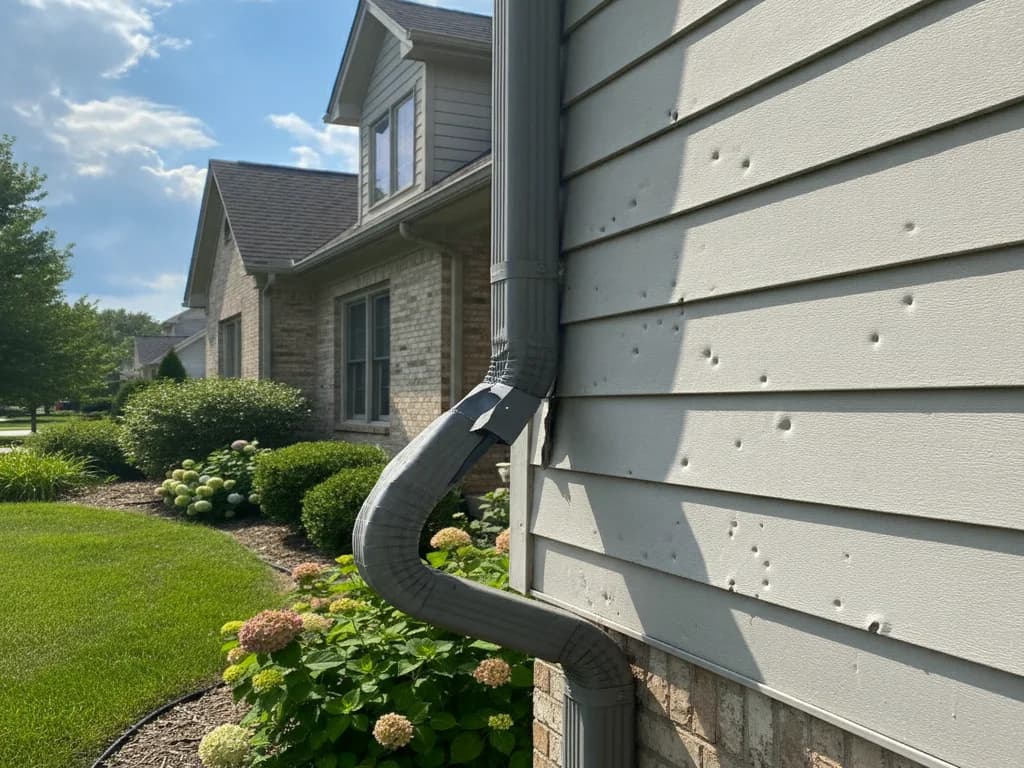
Why Kansas City Siding Takes a Beating
Kansas City sits squarely in the part of the country where spring and summer storms roll through with real force. Warm, humid air moving up from the south collides with cooler air behind passing fronts, and the result is the kind of severe weather the metro knows well: high straight-line winds, driving rain, and hail. The National Weather Service office in Pleasant Hill (EAX) issues watches and warnings for the KC metro and west-central Missouri throughout the season, and homeowners on both sides of the state line get familiar with the routine.
Your home's siding is the first exterior surface to take that punishment. Wind-driven hail strikes the broad face of the wall, wind pushes at panel edges and seams, and blowing debris can gouge and crack even durable materials. Damage is not always dramatic. A storm can leave a roof visibly torn up while the siding shows only subtle bruising that is easy to miss from the ground — which is exactly why so many KC homeowners do not realize their siding was compromised until leaks or loose panels show up months later.
Knowing what storm damage looks like, and handling it in the right order, protects both your home and your ability to make a fair insurance claim. For general storm-preparedness guidance, Ready.gov is a solid federal resource for the severe-weather risks common across Tornado Alley.
How to Spot Hail and Wind Damage on Siding
Do a walk-around of your home after any significant storm — ideally in daylight, and again a few days later once things dry out. Hail and wind leave different signatures, and both are worth catching early.
Signs of hail impact:
- Dents and dimples on vinyl or metal siding, often clustered on the side of the house the storm came from (frequently the south or west face in a typical KC storm track).
- Cracks, chips, or "bruises" on fiber cement or engineered wood — sometimes visible only when light rakes across the wall at an angle.
- Holes or punctures in older, brittle vinyl, which becomes more fragile in cold weather and after years of UV exposure.
- Chipped or knocked-loose paint and exposed substrate where hail struck repeatedly in the same spot.
Signs of wind damage:
- Loose, lifted, or rattling panels — wind gets under an edge and works the fastener loose over time.
- Missing pieces of siding, trim, soffit, or fascia, sometimes found in the yard or a neighbor's.
- Gaps at seams and corners where panels have shifted, opening a path for water behind the wall.
- Cracked or displaced trim, fascia, and soffit, which take wind loads at the roofline and eaves.
Pay special attention to spots where water intrusion does the most harm: around windows and doors, at inside and outside corners, and low on the wall near the foundation. Even a small opening in the weather barrier can let wind-driven rain reach the sheathing, and in KC's humid climate, trapped moisture invites rot and mold. If you can safely reach it, gently press on suspect panels — anything that flexes, rattles, or feels loose deserves a closer look. Never climb onto a wet or damaged roof to inspect; leave elevated inspection to a professional.
Document the Damage Before You Call Anyone
Before you call your insurance company or a contractor, build your own record of the damage. Good documentation protects you and keeps the whole process honest and grounded in facts rather than memory.
- Photograph everything. Take wide shots showing each affected wall, then close-ups of specific dents, cracks, and loose panels. Include a reference object (a coin or a tape measure) next to hail dents to show scale.
- Note the date and storm. Write down when the storm hit. Local NWS records and news coverage can help establish that a hail or wind event affected your area on that date.
- Log every affected area. Keep a simple written list — "south wall, hail dents; east corner, loose panel; garage soffit, missing section" — so nothing gets overlooked later.
- Save related damage. Storms rarely hit siding alone. Photograph any damage to the roof, gutters, windows, screens, and outdoor items, since it all supports the same claim.
- Do temporary protection only. If a panel is missing and rain is getting in, cover the opening to prevent further damage, and photograph it before and after. Do not make permanent repairs yet.
Keep this documentation together in one place. If you later work with a contractor on insurance restoration, an organized record makes their inspection faster and your claim clearer.
Working With Your Insurance Company
Homeowners insurance commonly covers sudden storm damage, but every policy is different, and coverage, deductibles, and depreciation vary widely. We can walk the property with you and document what we find, but we cannot tell you what your policy will pay or promise any particular claim outcome — only your insurer and your policy language determine that. Here is how the process generally unfolds.
- Review your policy first. Understand your deductible and whether your coverage is replacement-cost or actual-cash-value. This shapes what a claim is worth to you before you file.
- File promptly. Most policies expect you to report storm damage within a reasonable window. Filing sooner, with your documentation ready, keeps things moving.
- Meet the adjuster. Your insurer sends an adjuster to inspect. You are welcome to have your contractor present so everyone is looking at the same damage and nothing is missed.
- Get an independent assessment. A qualified storm-damage contractor can document the full scope of damage in writing, which is useful whether or not it matches the adjuster's initial findings.
- Understand the estimate. Insurance estimates and contractor estimates are built differently. A reputable contractor will explain any differences plainly rather than pressuring you.
A word of caution. After major KC storms, out-of-town "storm chasers" flood neighborhoods offering to "handle everything" and waive deductibles. Waiving a deductible is generally not legal, and a company that promises a guaranteed claim result is a red flag. Work with an established local contractor who documents honestly and lets your insurer make the coverage decision.
Repair, Section-Match, or Full Replacement?
Once the extent of damage is clear, you have a few paths forward. The right one depends on how much siding is affected, the age and type of your existing material, and whether a matching product is still available.
Spot repair makes sense when damage is limited to a few panels in an accessible area and you can source matching material. The challenge in KC's older neighborhoods is matching: siding fades over years of sun exposure, and discontinued colors or profiles can make a patch stand out. A small, well-matched repair is the least disruptive option when it is feasible.
Section replacement — redoing one full wall or elevation — is often the better call when one face of the house took the brunt of a storm. Replacing an entire elevation avoids the checkerboard look of scattered patches and gives you a clean color match across that plane.
Full replacement becomes the practical choice when damage is widespread, when the existing siding is already near the end of its service life, or when matching material simply is not available anymore. Many homeowners use a storm as the occasion to upgrade to a more durable material better suited to KC's freeze-thaw winters and humid, storm-prone summers — a decision we cover in depth in our guide to the best siding for Kansas City's climate. For a durable, impact-oriented option, non-combustible James Hardie fiber cement is a common upgrade choice in the metro.
If you are weighing a larger project, our overview of siding installation and the Kansas City siding cost guide can help you think through options before you request a quote.
Choosing a Storm-Damage Contractor in KC
The contractor you pick after a storm matters as much as the material you choose. A rushed, low-bid repair by a crew that leaves town next week can cost you far more when hidden water damage surfaces later. Look for a few basics:
- A local, established presence in the Kansas City metro — someone you can reach next season, not just this week.
- Proof of insurance and licensing appropriate to your city. Ask, and verify.
- Written, itemized estimates you can compare, with a clear scope of work.
- Honest talk about your claim. A trustworthy contractor documents damage and coordinates with your adjuster — they do not promise a guaranteed payout or pressure you to sign before your insurer has weighed in.
- Willingness to inspect related systems. Because storms hit roofs, gutters, and windows too, a thorough contractor looks at the whole exterior envelope.
Serving homeowners across the metro — from Kansas City, MO and Kansas City, KS out through the suburbs — our team documents storm damage honestly and helps you understand your options. When you are ready, you can request a free inspection and estimate.
Does my homeowners insurance cover hail damage to siding in Kansas City?
Many homeowners policies cover sudden storm damage, including hail and wind, but coverage, deductibles, and depreciation vary by policy. We can inspect and document the damage in writing, but only your insurer and your specific policy language determine what is covered and what a claim will pay. Review your policy and contact your insurance company to confirm your coverage before filing.
How can I tell if a storm damaged my siding?
Walk around your home in daylight after a storm and look for dents or dimples on vinyl and metal, cracks or bruising on fiber cement, loose or lifted panels, missing pieces of siding or trim, and gaps at seams and corners. Pay close attention around windows, doors, and corners where water can get behind the wall. Damage is often subtle, so inspect at an angle where raking light reveals dents.
Should I file a claim before or after getting a contractor estimate?
It is usually best to document the damage yourself with photos and notes, then contact your insurer to start the claim. Having a qualified local contractor inspect and provide a written scope of damage is helpful and can be done before or alongside the adjuster's visit. Understanding your deductible first tells you whether filing makes financial sense for the damage you have.
What is a storm chaser, and why should I be cautious?
Storm chasers are out-of-area contractors who move into a neighborhood after major storms, often going door to door promising to handle everything and sometimes offering to waive your deductible. Waiving a deductible is generally not legal, and any company promising a guaranteed claim outcome is a warning sign. Work with an established local contractor who documents honestly and lets your insurer make the coverage decision.
Can damaged siding just be patched, or does the whole wall need replacing?
It depends on how much is damaged, the age and type of your siding, and whether matching material is still available. A few panels in an accessible area can sometimes be spot-repaired, but faded or discontinued siding is hard to match cleanly. When one elevation took most of the damage, replacing that full wall often looks better than scattered patches, and widespread damage on aging siding may call for full replacement.