What KC Weather Does to a Deck
A deck in Kansas City lives a hard life. It bakes under humid summer sun, soaks through spring downpours, and then rides out a winter of freeze-thaw cycling that works at every board, fastener, and joint. The material you choose and the way it is built determine whether your deck still looks great in a decade or starts checking, cupping, and graying after a couple of seasons.
The two biggest climate pressures on a KC deck are moisture and temperature swing. Summer humidity keeps wood damp and feeds rot and mildew where water lingers, especially on shaded sections and near the ground. Then winter's repeated freezing and thawing expands and contracts every material, loosening fasteners and opening cracks over time. A deck that is designed and built with those forces in mind — with proper drainage, ventilation, and the right hardware — outlasts one that was simply thrown together in a weekend.
Getting the material choice right is the foundation of that decision, so let us compare the two main paths: composite and wood.
Composite vs. Wood for Kansas City
There is no single right answer — the best material depends on how much maintenance you want to do, the look you are after, and how you weigh upfront cost against long-term upkeep. But KC's humidity and freeze-thaw cycling do tilt the scales in specific ways.
Composite decking is engineered to resist exactly the conditions that punish wood here: it does not absorb water the way lumber does, so it holds up well against humidity and freeze-thaw without rotting, warping, or splintering. It never needs staining or sealing, which is a meaningful advantage over the life of the deck. The trade-off is a higher upfront cost and a look that, while much improved in modern products, some purists still distinguish from real wood.
Wood decking — typically pressure-treated pine, or premium options like cedar — offers natural beauty and a lower upfront cost. The catch in KC is maintenance: wood needs regular cleaning and periodic staining or sealing to survive our humidity and sun, and even well-kept wood eventually shows the wear of freeze-thaw cycling. If you enjoy deck upkeep as part of homeownership, wood can be very satisfying; if you would rather not think about it, that maintenance becomes a recurring chore.
Below, we look at each more closely so you can match the material to how you actually live.
A Closer Look at Composite Decking
Composite decking combines wood fibers and plastic into boards engineered for durability and low maintenance. Modern capped composites add a protective polymer shell that resists fading, staining, and scratching. Two of the most established manufacturers are Trex and TimberTech, both of which engineer products for heat, moisture, and fade resistance.
Why it works in KC:
- Moisture resistance. Composite does not soak up water, so it resists the rot and mildew that humidity drives into wood, and it holds up through freeze-thaw without the cracking and cupping lumber suffers.
- No refinishing. You never stain or seal a composite deck. Cleaning is typically a wash with soap and water — a real time savings over the deck's life.
- Color and finish retention. Capped composites resist the graying and fading that KC sun causes on unprotected wood.
- Splinter-free surface, a genuine comfort benefit for bare feet and families.
Trade-offs: composite costs more up front than pressure-treated wood, and it can get warm underfoot in direct summer sun (lighter colors help). For many KC homeowners, the freedom from staining and the long service life make it the better overall value despite the higher starting price. Explore options on our decks and patios page.
A Closer Look at Wood Decking
Wood remains a beloved, budget-friendly deck material, and there is nothing quite like the look and feel of real lumber. The two common paths in KC are pressure-treated pine and cedar.
Pressure-treated pine is the most affordable and widely used decking material. It is treated to resist rot and insects, which helps it survive KC's moisture, but it still needs regular maintenance — cleaning and re-sealing on a schedule — and it tends to check and move as it dries. Kept up, it serves well; neglected, it degrades faster in our humid, freeze-thaw climate.
Cedar is a premium softwood with natural oils that resist rot and insects and a warm, attractive grain. It is more dimensionally stable than pine and ages gracefully, but it is not maintenance-free — it still benefits from periodic sealing to hold its color and resist KC's sun and moisture, and it costs more than pressure-treated pine.
Whichever wood you choose, the maintenance reality is the deciding factor for most homeowners: a wood deck in Kansas City needs consistent care to look its best and reach its full lifespan. If that upkeep appeals to you, wood is a beautiful choice. If it does not, composite spares you the recurring work. Either way, a covered or partially covered structure can extend a deck's life and your usable season — see our covered decks and pergolas options.
Planning Timeline: Building to Be Ready by Spring
One of the most common mistakes KC homeowners make is waiting until the first warm weekend of spring to start thinking about a deck. By then, contractors are booked and materials are in demand — and you lose weeks of prime deck season waiting. Planning backward from when you want to use the deck is the smarter approach.
Fall and winter: plan and design. The quieter months are the ideal time to figure out size, layout, material, and budget without the springtime rush. Designing early also gives you time to consider how the deck connects to your home and yard.
Late winter to early spring: permits and scheduling. Many KC-area municipalities require a permit for a deck, and the review process takes time. Getting your project into a contractor's schedule before the spring surge means you are not stuck at the back of the line. Building codes and permit requirements vary by city across the metro, so confirming the process for your jurisdiction early avoids delays.
Early spring: build. Building in early spring means the deck is finished and ready exactly when you want to start using it — for the first warm evenings, spring cookouts, and the whole summer that follows. Because weather is mild, construction goes smoothly, and you are not competing for the peak-season calendar slots.
The takeaway: if you want to be grilling on a new deck by Memorial Day, start the conversation over the winter. A little lead time turns a stressful scramble into a smooth project. When you are ready to plan, request a free estimate and we will help you map the timeline to your goal date.
Design Considerations for Our Climate
Beyond material, a few design choices make a real difference to how a KC deck performs and how much you enjoy it.
- Shade and cover. A pergola, covered section, or roof extension makes a deck usable during hot afternoons and light rain, and it shelters the structure from some of the sun and moisture that age it. Our covered deck and pergola options are popular for exactly this reason.
- Drainage and ventilation. Good airflow beneath the deck and proper drainage keep moisture from collecting and rotting the structure — critical in our humid climate.
- Quality hardware. Corrosion-resistant fasteners and connectors hold up through freeze-thaw cycling and moisture, keeping the deck tight and safe for years.
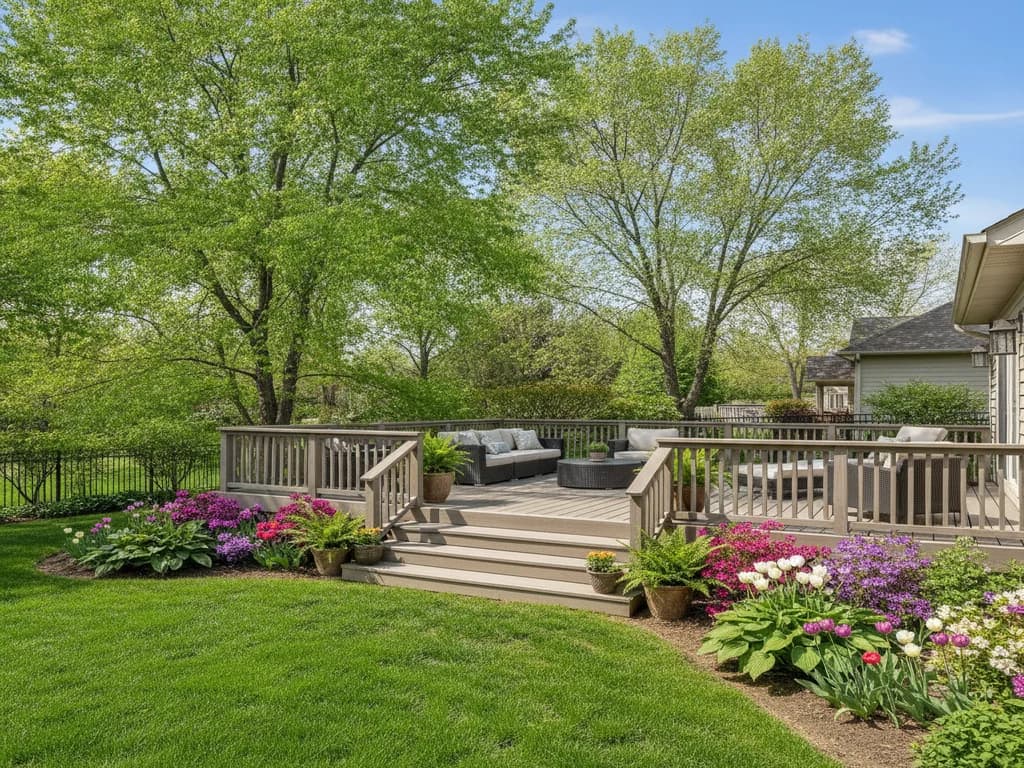
- Integrated outdoor living. Built-in seating, lighting, and a defined space for cooking or gathering turn a plain platform into an outdoor room. Our outdoor living service brings these elements together.
Thoughtful design does not just look better — it extends the life of the deck and the number of months each year you actually use it. That is the real return on planning ahead.
Is composite or wood decking better for Kansas City?
It depends on your priorities. Composite resists KC's humidity and freeze-thaw cycling without rotting, warping, or needing stain, making it low-maintenance and long-lasting, though it costs more up front. Wood — pressure-treated pine or cedar — is more affordable and offers natural beauty but requires regular cleaning and periodic sealing to survive our climate. If low maintenance matters most, composite usually wins; if you want the look of real wood and don't mind upkeep, wood is a fine choice.
When should I start planning a deck to have it ready for spring?
Start over the fall or winter. Design and budgeting are easiest in the quieter months, permits take time to secure, and getting into a contractor's schedule before the spring rush means your deck can be built in early spring and ready when the weather warms up. Waiting until the first warm weekend often means booked contractors and weeks of lost deck season.
Do I need a permit to build a deck in the Kansas City area?
Many KC-area municipalities require a permit for a new deck, but requirements vary by city across the metro and the state line. Because the process and current fees differ by jurisdiction, confirm the requirements with your local building department before you build. Building early into your planning timeline gives you room for the review process without delaying construction.
Does composite decking get too hot in KC summers?
Composite decking can feel warm underfoot in direct summer sun, as most decking materials do. Choosing lighter colors reduces heat buildup, and adding shade with a pergola or covered section keeps the surface cooler and the space more comfortable during hot afternoons. For many homeowners, this trade-off is outweighed by composite's low maintenance and durability in our climate.
How long does a wood deck last in Kansas City?
It depends heavily on maintenance and the wood species. Pressure-treated pine and cedar can both serve well for years in KC when cleaned and re-sealed on a regular schedule, but our humidity, sun, and freeze-thaw cycling wear on wood faster when maintenance is neglected. Composite decking generally lasts longer with far less upkeep, which is part of why many homeowners choose it despite the higher upfront cost.