What Kansas City's Climate Demands of Siding
Choosing siding for a Kansas City home is not the same as choosing it for a mild coastal climate. The metro sits in a continental climate zone that swings hard between seasons, and your siding has to hold up to all of it at once. Before comparing products, it helps to understand the specific conditions any material has to survive here.
Freeze-thaw cycling. KC winters bring repeated crossings of the freezing point — a wall can be frozen at dawn and thawed by afternoon, over and over through the season. Any material that absorbs water is vulnerable, because trapped moisture expands as it freezes and works at seams and edges. Moisture management is the quiet make-or-break factor in Kansas City siding.
Hot, humid summers. Summers in the metro are warm and humid, which stresses siding in two ways: sustained heat drives thermal expansion and contraction, and high humidity slows drying on shaded north-facing walls, encouraging rot and mildew where water lingers.
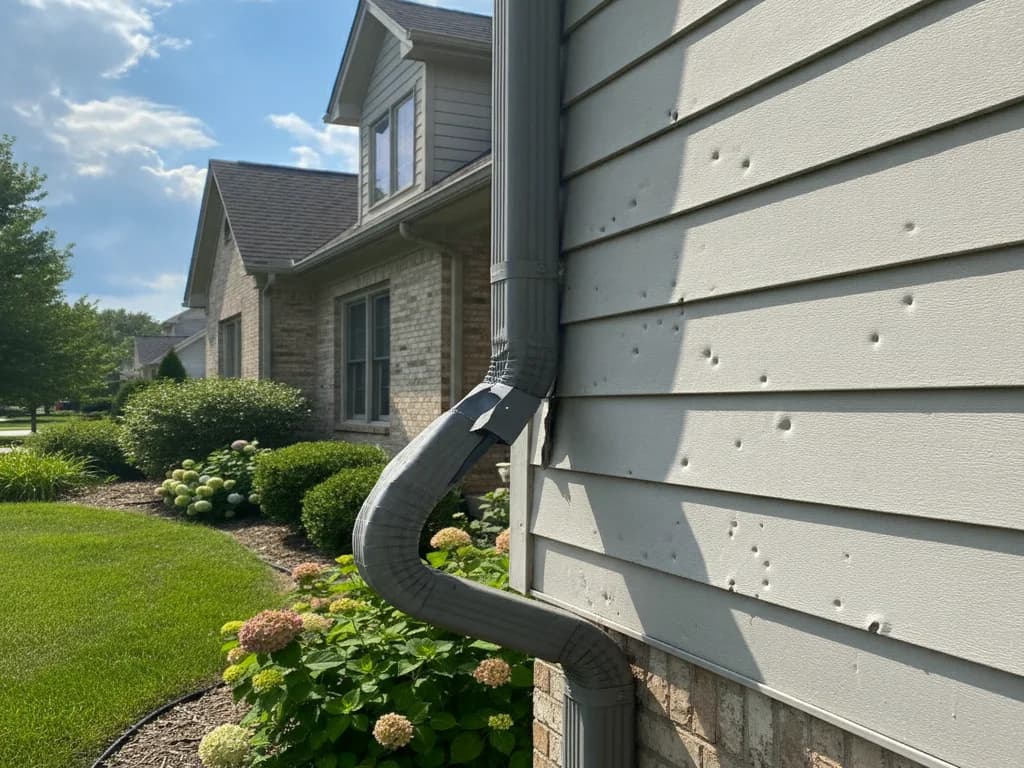
Severe storms and hail. Spring and summer bring the strong winds and hail the region is known for. Impact resistance and secure fastening are not luxuries here — they are what keeps your siding on the wall through storm season. The National Weather Service (Pleasant Hill/EAX) tracks these events for the KC metro every year.
Sun exposure. South- and west-facing walls take the most UV, which fades pigments and ages materials faster than shaded elevations. Color retention matters most on those sun-beaten faces.
With those four pressures in mind — freeze-thaw, humidity, storms, and sun — here is how the three most common siding materials in the metro stack up.
Fiber Cement Siding (James Hardie)
Fiber cement is our most-recommended siding for Kansas City homes, and the climate is a big part of why. James Hardie is the dominant brand in this category, engineering products in climate-specific formulations designed for regions with freeze-thaw cycling.
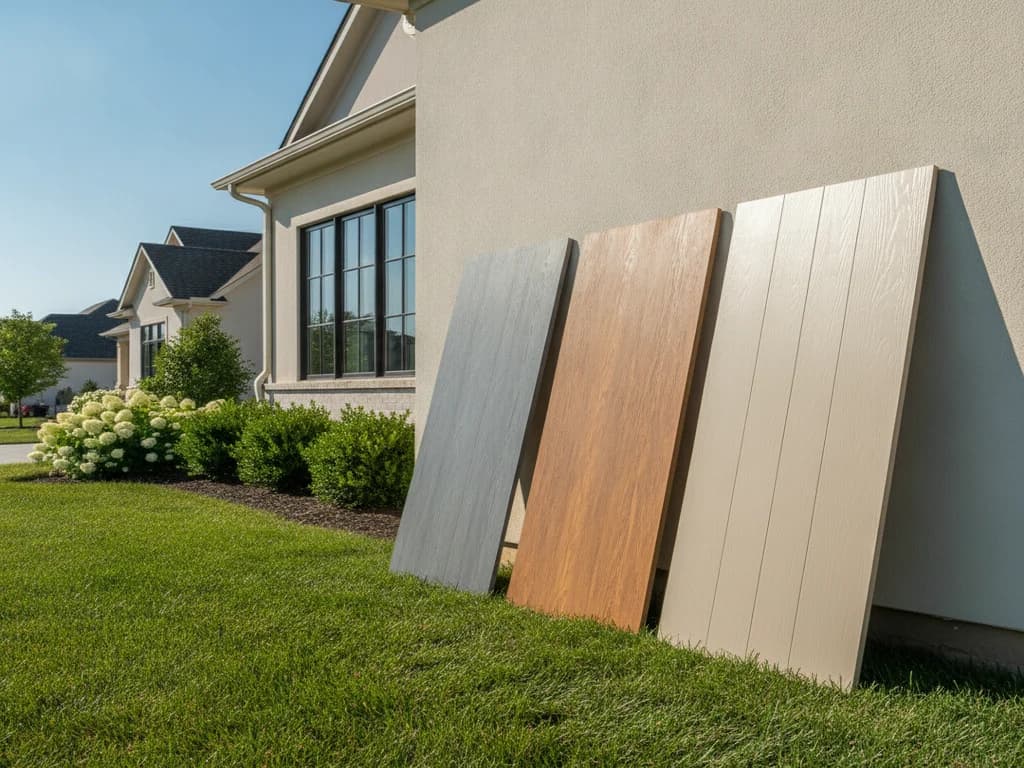
What it is: a composite of cement, sand, and cellulose fiber, formed into planks, shingles, or panels that convincingly mimic wood, stone, or a smooth painted finish.
Why it suits KC:
- Dimensional stability. Fiber cement does not absorb meaningful moisture, so freeze-thaw cycling does not swell or crack it the way it does absorbent materials. It also holds its shape through summer heat without warping.
- Storm resilience. The material is dense and durable, standing up to wind and impact better than brittle older siding.
- Fire resistance. Fiber cement is non-combustible, an inherent safety advantage.
- Pest and rot resistance. It gives insects and moisture nothing to feed on.
- Color retention. Factory-applied finishes hold color far longer than field paint on KC's sun-exposed walls.
Trade-offs: fiber cement is heavy and requires experienced installers with the right tools and technique — nailing patterns and flashing must be correct, or performance and warranty coverage suffer. It generally costs more up front than vinyl, though many homeowners find the longevity and low maintenance make it the better long-run value. If you want the details on our process, see our James Hardie siding and siding installation pages.
Engineered Wood Siding (LP SmartSide)
Engineered wood siding has become a popular middle ground for KC homeowners who love the look of real cedar but do not want its maintenance. LP SmartSide is the leading brand in this category.
What it is: engineered wood strands treated with a preservative system that resists fungal decay, termites, and moisture, then bonded into planks and panels with a convincing wood-grain texture.
Why KC homeowners like it:
- Authentic wood look. The deep grain reads as real cedar from the street, which matters in neighborhoods with a traditional character.
- Impact resistance. Engineered wood absorbs impacts well — a practical benefit in a metro that sees hail and windblown debris.
- Lighter and workable. It is lighter than fiber cement and cuts and nails like wood, which can make for efficient installation.
- Good thermal behavior. It handles KC's temperature swings with less movement than vinyl.
Trade-offs: because the core is wood-based, cut edges must be sealed and primed carefully during installation to keep moisture out — critical in a humid, freeze-thaw climate. It is a combustible material, and its finish typically needs refreshing sooner than a factory fiber cement finish. Installed well, though, it is a strong option for homeowners set on the wood aesthetic. Learn more on our LP SmartSide siding page.
Vinyl Siding
Vinyl remains the most budget-friendly siding and is installed on countless KC-area homes. Modern vinyl comes in a wide range of colors and profiles, including options that mimic wood grain, and it has real strengths alongside some climate-specific limitations worth understanding.
What it is: extruded PVC formed into planks, shingles, or panels.
Strengths in KC:
- Does not absorb moisture, which is genuinely helpful against freeze-thaw damage when it is installed correctly as part of a proper drainage plane.
- Low routine maintenance — typically just occasional rinsing.
- Approachable cost, which keeps it popular for budget-conscious projects and rentals.
Climate limitations:
- Thermal movement. Vinyl expands and contracts more than other materials. If it is nailed too tightly instead of allowed to float, it can buckle and wave on sun-exposed KC walls in summer heat. Correct installation with expansion allowance is essential.
- Cold-weather brittleness. Vinyl grows brittle in cold snaps and can crack from impact — a consideration during KC's winters and hail season. Thicker gauges hold up better.
- Fading. On south- and west-facing walls, standard vinyl shows fade over time; premium UV-stabilized lines perform better.
Vinyl is a reasonable choice for well-shaded elevations, tighter budgets, and rental properties — especially in a thicker gauge with UV stabilizers. See our vinyl siding page for options.
How the Options Compare for KC Homes
Rather than assign dollar figures that shift with material prices and labor, it is more useful to think about how each material behaves against the four pressures KC puts on siding. Here is a plain comparison.
| Consideration | Fiber Cement | Engineered Wood | Vinyl |
|---|---|---|---|
| Freeze-thaw resistance | Excellent | Good (edges must be sealed) | Good when properly installed |
| Storm/impact resilience | Very good | Very good | Fair; better in thicker gauges |
| Summer heat stability | Excellent | Good | Can buckle if installed tightly |
| Color retention in sun | Excellent (factory finish) | Good; refinish periodically | Fair to good; fades over time |
| Fire resistance | Non-combustible | Combustible | Combustible |
| Routine maintenance | Low | Low to medium | Low |
| Relative upfront cost | Higher | Middle | Lower |
For real numbers tailored to your home's size and condition, our Kansas City siding cost guide and a free on-site estimate are the honest way to get pricing — a walk-around of your actual walls beats any generic per-foot figure.
Making the Right Choice for Your Home
The best siding for your home comes down to how you weigh durability, appearance, maintenance, and budget against KC's climate. A simple framework:
Lean fiber cement if you want the longest service life, the lowest maintenance, non-combustible peace of mind, and factory color that holds up on sun-beaten walls — and you are planning to stay in the home or want the resale strength that comes with it.
Lean engineered wood if the authentic cedar look is important to you, you want strong impact resistance for storm season, and you are comfortable refreshing the finish periodically.
Lean vinyl if budget is the driving concern, the home is a rental or you plan to sell before long, or the walls in question are well-shaded — and you choose a thicker, UV-stabilized product installed with proper expansion allowance.
Whatever the material, installation quality is what separates siding that lasts decades from siding that fails early. Proper flashing, moisture management behind the wall, and careful detailing at windows, corners, and penetrations matter as much as the product on the box. If a storm is what put siding on your radar, our guide to spotting hail and wind damage on KC siding is a good next read. When you are ready, request a free estimate and we will assess your home's exposure and walk you through the right options.
What is the best siding material for Kansas City's climate?
For most Kansas City homes, fiber cement (such as James Hardie) is the best all-around choice. It resists freeze-thaw damage because it does not absorb moisture, holds its shape through hot humid summers, stands up well to storms, is non-combustible, and keeps its factory color on sun-exposed walls. Engineered wood and vinyl are also viable depending on your priorities for appearance, budget, and maintenance.
Is vinyl siding a bad choice for Kansas City?
Not necessarily. Vinyl is budget-friendly, low-maintenance, and does not absorb moisture, which helps in a freeze-thaw climate. Its limitations are thermal movement that can cause buckling on hot sun-exposed walls if installed too tightly, brittleness in cold snaps, and fading over time. Choosing a thicker gauge with UV stabilizers and ensuring proper installation with expansion allowance addresses most of these concerns.
Why does freeze-thaw matter so much for siding here?
Kansas City winters cross the freezing point repeatedly, sometimes within a single day. When a siding material absorbs water and that water freezes, it expands and works at seams, edges, and fasteners over thousands of cycles. Materials that do not absorb moisture, or installations that manage moisture properly behind the wall, are what hold up. This is why moisture management is central to siding selection in the KC metro.
How much does new siding cost in Kansas City?
Cost depends on your home's size, the current siding's condition, the material you choose, and details like trim, fascia, and flashing work. Rather than quote a generic per-foot figure, we recommend a free on-site estimate that looks at your actual walls. Our Kansas City siding cost guide explains the factors that drive price so you can compare quotes with a clear understanding of what is included.
Does new siding help with hail and storm resistance?
Upgrading to a more durable, well-fastened material can improve how your home handles wind and impact, and dense products like fiber cement and engineered wood generally resist damage better than brittle older siding. No siding is hail-proof, but modern materials installed correctly, with secure fastening and proper detailing, give your home a better chance of coming through a storm intact.