If you have decided to keep a tub, the next choice is the style: a freestanding soaking tub that stands on its own as a centerpiece, or a built-in tub set into an alcove or deck. Both can be beautiful; they differ in the space they need, what they cost to install, how they clean, and the feel they give a bathroom.
The short version: a freestanding tub is the spa-like statement piece for a larger bathroom, while a built-in tub is the practical, space-efficient, family-friendly choice — and usually the more budget-conscious one. Here is how they compare.
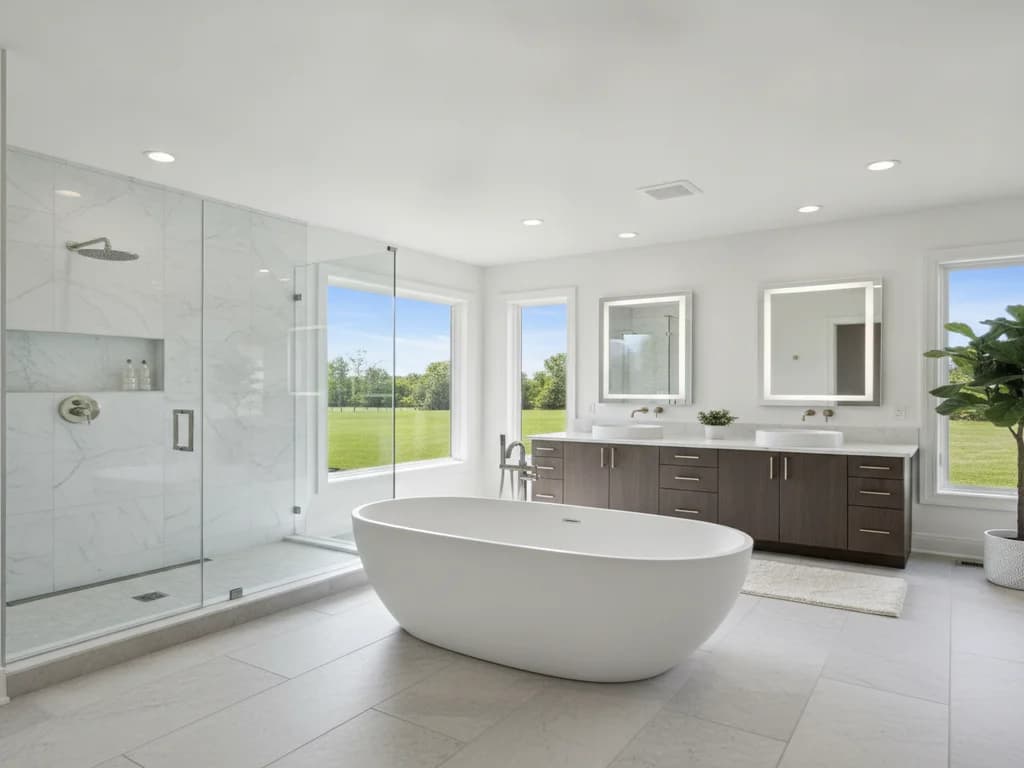
Advantages
- A striking, spa-like centerpiece that anchors a larger bathroom.
- Placement flexibility — it does not have to sit against a wall.
- Easy to clean around, with open floor on all sides.
- A wide range of styles, from modern ovals to classic clawfoot.
Trade-offs
- Needs more open floor space to look and feel right.
- Often a higher cost for the tub and the floor-run plumbing.
- Fewer built-in ledges for soap, bottles, and accessories.
- Filling and getting in can be deeper; a floor-mount filler adds cost.
Advantages
- Space-efficient — tucks into an alcove and pairs with a shower.
- Generally the more budget-friendly tub to buy and install.
- Built-in deck or ledge for soap, shampoo, and accessories.
- The practical choice for bathing kids and everyday family use.
Trade-offs
- A more built-in, less statement-making look than a freestanding tub.
- Fixed against walls, so the layout is less flexible.
- The surround and corners take a bit more effort to keep clean.
- Fewer dramatic style options than freestanding models.
Let your bathroom's size and how you use it lead. A freestanding tub rewards a larger primary bath; a built-in tub is the efficient, family-friendly workhorse in most other spaces.
Choose freestanding if
- You have a larger primary bath and want a spa-like focal point.
- A separate walk-in shower handles the everyday washing.
- You love long soaks and want the tub to be the star of the room.
- You have the floor space to give it room to breathe.
Choose built-in if
- You are working with a standard or smaller bathroom footprint.
- You want a practical tub-shower combo or a family bathing tub.
- Budget efficiency is a priority.
- You want built-in ledges and a space-saving layout.
Space is usually the deciding factor in Kansas City homes. Many older metro baths — the tight primary baths of 1950s ranches and mid-century homes — simply do not have the open floor a freestanding tub wants, so a built-in alcove tub (or a tub-shower combo) is the natural fit. When a remodel opens up the footprint or the home has a larger primary suite, a freestanding soaking tub becomes a beautiful option.
Plumbing matters too. A freestanding tub often needs its supply and drain run to the middle of the floor rather than a wall, which can mean opening the floor — straightforward in new construction or a full gut, more involved as a retrofit in an older home. We assess the floor and plumbing before recommending a placement.
Whichever tub you choose, keeping at least one bathtub in the home protects resale — most buyers, especially families, want a tub somewhere. If you are weighing whether to keep a tub at all, our walk-in-shower-versus-bathtub guide walks through that decision per bathroom.