It is the question we hear in almost every bathroom consultation across the Kansas City metro: should we replace the tub with a walk-in shower, or keep the bathtub? There is no universal right answer — it depends on your household, your home, your plans for the next decade, and which bathroom you are talking about. What there is, is a clear way to think it through.
The single most important idea to carry into the decision is this: the choice is per-bathroom, not per-house. Most homes are best served by keeping at least one tub somewhere and converting the bathrooms you rarely bathe in. Get that framing right and the rest of the decision gets much easier.
Advantages
- Far easier and safer to step into — no high tub wall to climb over.
- Makes a small bathroom feel larger and more open, especially curbless.
- Built to age with you: room for a bench, grab bars, and a hand-held shower.
- Quicker daily use and, with a WaterSense showerhead, lower water use than filling a tub.
- A frameless-glass walk-in shower reads as a modern, high-end upgrade.
Trade-offs
- Removes the ability to take a bath in that room — a drawback for young families.
- If it is the home's only tub, it can concern some buyers at resale.
- A quality tiled shower requires real waterproofing, so it is not the cheapest option done right.
Advantages
- Keeps a bath option for small children, pets, and long soaks.
- Most buyers want at least one tub in the home, which protects resale.
- A tub-shower combo is often the most budget-friendly single fixture.
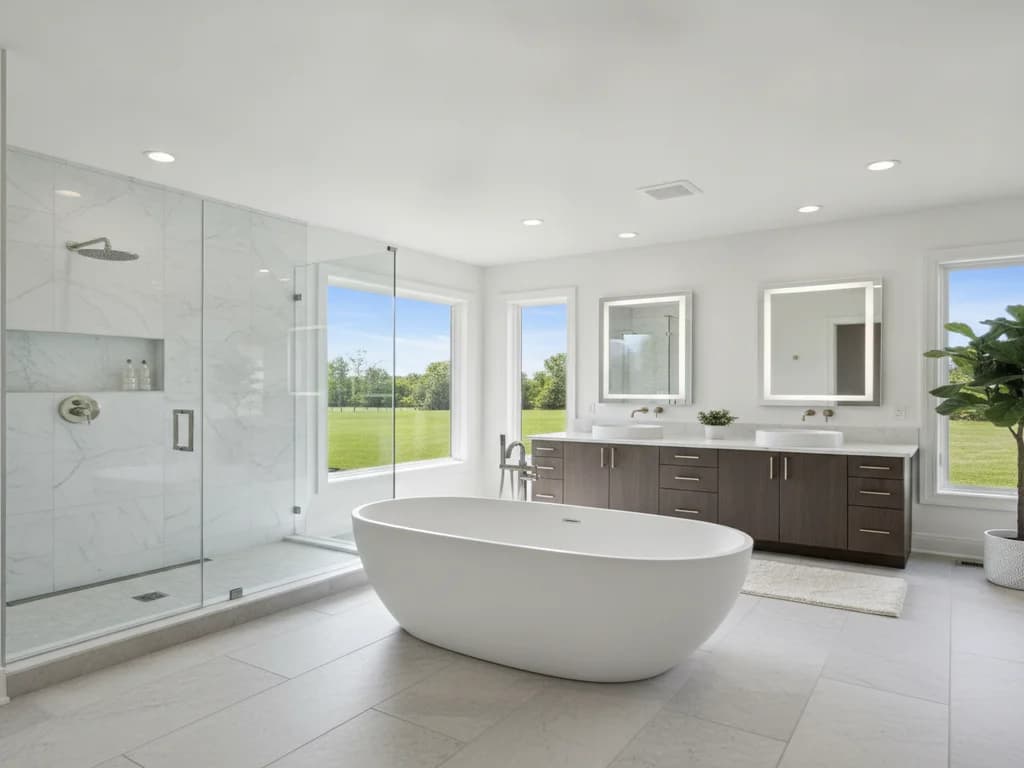
- A freestanding soaking tub can be the spa centerpiece of a primary bath.
Trade-offs
- The tub wall is a genuine trip hazard — a leading spot for falls as we age.
- Takes up more floor space, which a shower could open up.
- Rarely-used tubs are wasted square footage in many primary baths.
- Filling a tub uses more water than a short shower.
Run your bathroom through these two lists. Because the choice is per-bathroom, many homes end up doing both — a walk-in shower in the primary suite and a tub kept in the hall bath.
Choose a walk-in shower if
- This is your primary bath and you shower far more often than you bathe.
- You are planning to stay in the home and want it to work as you age.
- The bathroom feels cramped and you want to open up the floor space.
- Another bathroom in the home already has, or will keep, a tub.
Keep or add a bathtub if
- You have young children or expect to, and need a practical place to bathe them.
- It is the home's only bathtub — keeping one tub protects resale.
- You genuinely use a tub to relax and would miss a soak.
- You want a freestanding tub as the focal point of a larger primary bath.
Kansas City's housing mix shapes this decision. In older KCMO, Independence, and inner-Kansas-side neighborhoods, primary baths were often built tight, with a single tub crammed against a wall — exactly the situation where a walk-in shower opens the room up and a hall bath keeps the family tub. In newer Overland Park, Olathe, Lee's Summit, and Blue Springs homes, you frequently already have multiple baths, which makes converting the primary suite to a large shower an easy call.
Whichever you choose, our humid summers mean ventilation is not optional. A shower or a tub-shower both put moisture into the room, so we size the exhaust fan to the space and vent it fully to the exterior — the same standard, regardless of which fixture you pick.