The vanity is the workhorse and the centerpiece of a bathroom — it holds the sink, the storage, and a big share of the room's style. Choosing one comes down to a few decisions: floating or freestanding, single or double, and what kind of sink and counter sit on top. Each affects how the room looks, how much it stores, and how easy it is to keep clean.
This guide walks through those choices honestly, with an eye on the things that matter in Kansas City homes — tight older footprints, hard water, and the storage every family bathroom needs.
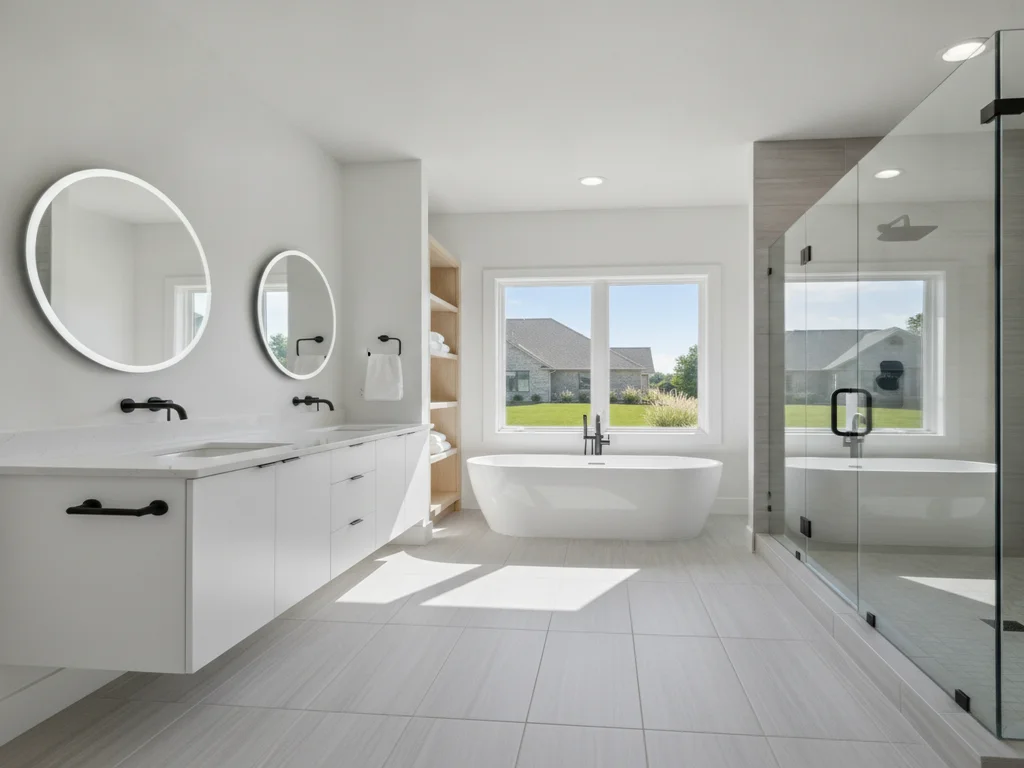
Floating (wall-mounted)
- Shows more floor, making a small bathroom feel larger and more open.
- Easier to clean under — no base sitting on the floor to trap grime.
- A modern, high-end look, with the mounting height set to you.
- Pairs well with vessel or trough sinks for a designer feel.
- Must anchor into solid in-wall blocking, so it is planned during the build.
- Slightly less enclosed storage than a floor-standing cabinet of the same width.
- Plumbing sometimes needs relocating to hide behind the cabinet.
Freestanding
- Maximum enclosed storage — drawers and cabinets down to the floor.
- A huge range of styles, from classic furniture-look to modern.
- Straightforward to install over standard wall plumbing.
- Hides plumbing and clutter completely behind doors.
- Covers the floor, so it can make a small room feel a bit tighter.
- Harder to clean around the toe-kick and base.
- A more traditional, built-in look than a floating vanity.
Lean floating if
- You want a small bathroom to feel more open and show more floor.
- A modern, designer look is the goal.
- We are already opening the wall to add blocking and adjust plumbing.
Lean freestanding if
- Maximum enclosed storage is the priority.
- You prefer a classic, furniture-style or built-in look.
- You want the simplest install over existing wall plumbing.
A double vanity is a genuine convenience in a shared primary bath — but only when the wall is wide enough that both sinks and the counter between them stay usable. Squeezing two sinks into a narrow vanity leaves no landing space and cramped storage. In many bathrooms, a single vanity with generous counter and drawers is the smarter use of the wall. We size it to your real footprint so it stores what you need without crowding the room.
Undermount sinks paired with quartz or solid-surface counters are the easiest to keep clean — the counter wipes straight into the bowl with no rim to catch grime. Vessel sinks make a bold design statement and suit a floating vanity, but sit higher and need wiping around the base. At the faucet, a WaterSense-labeled bathroom faucet trims water use while keeping performance, and a brushed or matte finish hides our hard-water spotting better than polished chrome.
Storage and scale drive most vanity decisions in Kansas City homes. In the tight bathrooms of older bungalows and ranches, a floating vanity or a shallower cabinet keeps a small room from feeling boxed in, while a larger primary bath can carry a double vanity with all the drawers a family needs. We size the vanity to the real footprint so it stores what you need without crowding the room.
Hard water is worth a thought at the sink. Brushed and matte faucet finishes hide mineral spotting better than polished chrome, and a WaterSense-labeled bathroom faucet trims water use without sacrificing performance. Undermount sinks with solid-surface counters wipe clean with no rim to catch grime — a small, practical win in our water.
Whatever the style, an aging-in-place plan can shape the vanity too: a comfortable counter height, knee space at a section of counter, and lever handles keep the vanity usable for everyone, now and later.