The question every homeowner asks before a bathroom remodel is simple: how long will my bathroom be out of commission? The honest answer is that a typical full bathroom remodel spans a few weeks from demolition to final walkthrough — but the exact timeline depends on the scope, whether the layout changes, and material lead times far more than on how fast anyone swings a hammer.
What helps most is understanding the sequence. A bathroom is built in phases that have to happen in order, and several of them include drying and inspection time that cannot be rushed. This guide walks through those phases so you know what to expect and where the schedule is really set.
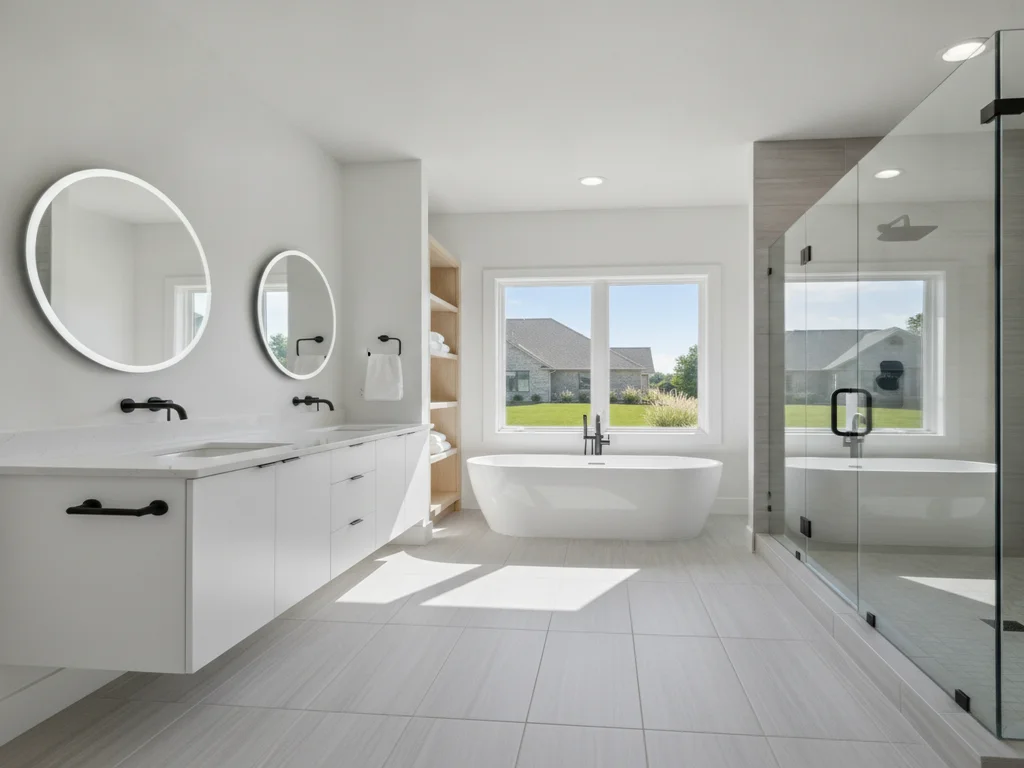
A bathroom is built in a fixed sequence. The durations below are typical and scope-dependent — the value is in seeing the order and where time is genuinely required.
Design and material selectionBefore work begins
Before any demolition, we finalize the layout and select tile, vanity, fixtures, and glass. This phase happens up front because the longest lead item — often the vanity, custom glass, or a specific tile — sets the whole schedule. Ordering early is the single best thing you can do to avoid a mid-project stall.
DemolitionOften a day or two
Out come the old tile, fixtures, and surfaces, down to the studs and subfloor where needed. This is also when hidden conditions surface — in older KC homes, that can mean soft subfloor, dated plumbing, or missing ventilation, which we assess before rebuilding.
Rough-in: plumbing and electricalA few days
With the walls open, we relocate or update plumbing and electrical, add a properly vented exhaust fan, and frame any layout changes. Moving fixtures adds time here. This work is inspected before walls close up.
Waterproofing and wall boardA few days, with cure time
The shower gets its waterproofing membrane and a sloped, sealed base, and backer board goes up. Some of this involves cure or set time that cannot be sped up — it is part of why a quality shower takes the time it does.
Tile and surfacesOften the longest phase
Setting tile, then letting it cure before grouting, is usually the most time-consuming phase, especially with detailed or large-format tile. It is skilled, sequential work — the finished look and the waterproofing both depend on not rushing it.
Fixtures, vanity, and finishesA few days
The vanity, toilet, faucets, shower glass, lighting, mirror, and hardware go in, followed by paint and trim. The bathroom starts looking finished here.
Final inspection and walkthroughThe last step
Any required final inspection is completed, and we walk the finished bathroom with you, address punch-list items, and share care guidance. Then it is yours.
- Material lead times — a back-ordered vanity, custom glass, or specialty tile is the most common cause of a paused project, which is why we order early.
- Hidden conditions in older homes — rot, corroded plumbing, or missing ventilation found at demolition adds scope, though it is far cheaper to fix while the wall is open.
- Layout changes — moving the toilet, shower, or vanity adds plumbing and inspection time versus keeping fixtures in place.
- Cure and dry times — waterproofing and tile setting need time to cure properly; rushing them is how showers fail.
- Permits and inspections — scheduling inspections at the right stages is built into the timeline and worth doing right.
- Change orders — deciding to add or change something mid-project naturally shifts the schedule.
If it is your only bathroom, plan ahead for the days the room is fully out of service — the demolition-through-rough-in stretch is the most disruptive. Many households arrange access to another bathroom for that window.
A bathroom remodel is entirely interior work, so it runs year-round regardless of Kansas City weather. The quieter late-fall-through-winter season often brings more scheduling flexibility than the spring rush, which can mean a smoother, faster start.