Lighting is the most overlooked decision in a bathroom remodel and one of the most transformative. The same room can feel like a cramped, shadowy closet or an open, spa-like retreat depending entirely on how it is lit. Good bathroom lighting is not one bright fixture in the middle of the ceiling — it is a few layers working together, each doing a specific job.
This guide covers the three layers of bathroom light, how to get the all-important vanity lighting right, which fixtures are safe near water, and the color and control choices that make a bathroom both beautiful and comfortable.
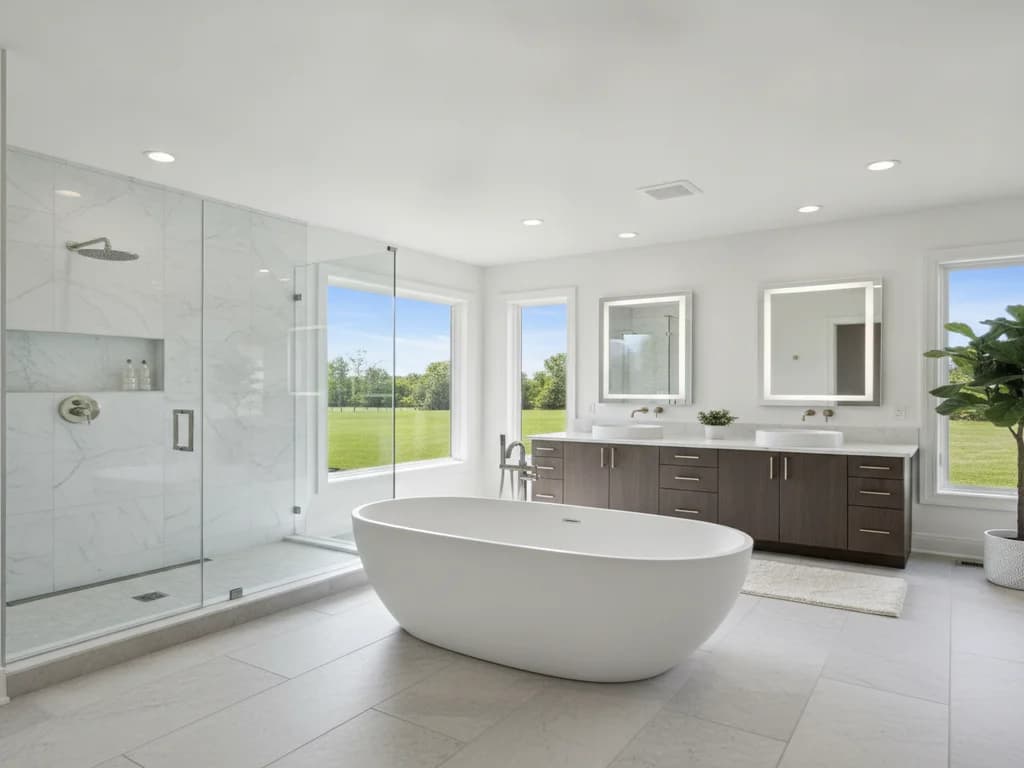
Ambient (general) light
The overall light that fills the room — usually recessed ceiling lights or a flush-mount fixture. It sets the base brightness so the space feels open, but on its own it casts shadows on your face at the mirror, which is why it is only the first layer.
Task (vanity) light
The most important layer: light at the mirror for shaving, makeup, and grooming. The key is lighting your face evenly from the sides, not just from above, so shadows do not fall across your eyes and chin. This is where a bathroom's lighting is won or lost.
Accent light
The finishing layer — a lit niche, toe-kick lighting under a floating vanity, or a fixture over a tub. It adds depth, warmth, and a designer feel, and doubles as gentle low-level light at night.
The vanity is where lighting matters most. A single fixture above the mirror throws shadows down onto your eyes and chin — exactly where you need to see for shaving and makeup. The fix is light from the sides: sconces or vertical fixtures flanking the mirror, or a wide, well-diffused fixture above combined with side light, so your face is lit evenly and shadow-free. Get this one layer right and the whole bathroom feels better to use every morning.
Fixtures near water have to be rated for it. A light in the shower or directly over a tub needs to be wet-rated (damp-rated in less-exposed spots), on the correct protected circuit — a safety and building-code requirement, not a style choice. Reworking a bathroom's lighting is also when we address the wiring behind it, which in older Kansas City homes often means bringing dated or unsafe circuits up to current code.
A color temperature around 2700K to 3000K reads clean and flattering without feeling cold, and a high color-rendering (high-CRI) light keeps skin tones and finishes accurate at the mirror. A dimmer lets the room shift from bright and task-ready to a soft, spa-like glow. Choosing efficient, ENERGY STAR-certified fixtures keeps energy use and heat down.
Many of Kansas City's older bathrooms are small and have little or no natural light — a windowless hall bath or a powder room tucked under the stairs. In those rooms, layered artificial lighting does the heavy lifting: bright, shadow-free vanity light plus good ambient light makes a dim, dated bathroom feel open and current.
Lighting also pairs with the two things every older bath needs at once — a properly vented exhaust fan and correct waterproofing. A remodel is the moment to run new lighting circuits, add the fan, and update wiring together, which in older homes often means bringing dated or unsafe wiring up to current code in the process.
For aging in place, lighting is a quiet safety feature: bright, glare-free light and a low-level night light reduce the risk of a stumble in a room where falls are already common. It costs little to plan in and pays off every night.