Quartz and granite are the two countertops we install most in Kansas City kitchens, and choosing between them is one of the decisions homeowners agonize over the most. Both are premium, both last for decades, and both look beautiful — so the choice comes down to maintenance, how you cook, and whether you want the consistency of an engineered surface or the one-of-a-kind character of natural stone.
The honest short version: quartz is the low-maintenance, consistent, no-sealing choice, and it is what we recommend most for busy family kitchens; granite is the natural-stone, heat-loving, every-slab-unique choice for homeowners who want real stone. Here is how they actually differ.
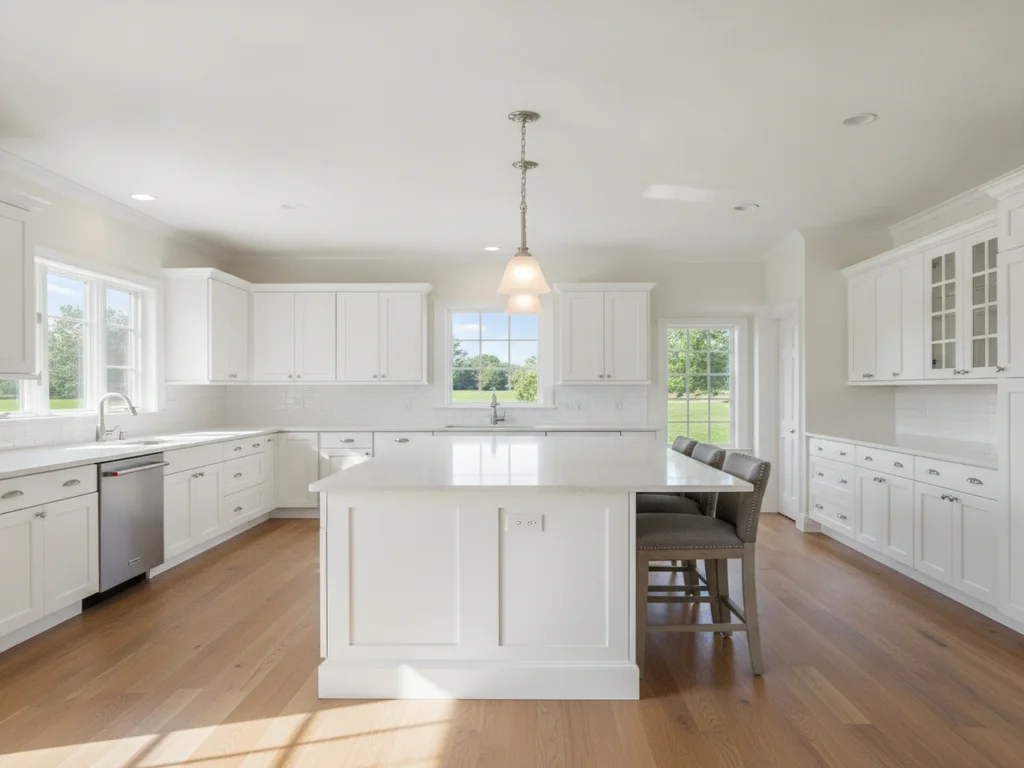
Advantages
- Non-porous and engineered, so it never needs sealing.
- Highly resistant to staining from wine, coffee, and everyday spills.
- Consistent color and pattern — what you see in the sample is what you get.
- A huge range of colors, including looks that mimic marble.
- Stands up well to the humidity swings between KC summers and winters.
Trade-offs
- Less heat-tolerant than granite — always use a trivet for hot pans.
- Prolonged direct sunlight can fade some colors over many years.
- An engineered surface rather than natural stone, if authenticity matters to you.
- Premium quartz can cost as much as, or more than, granite.
Advantages
- Natural stone, with a unique pattern in every single slab.
- Excellent heat resistance — very forgiving of hot cookware.
- Adds genuine natural character and can boost a kitchen's appeal.
- Extremely hard and scratch-resistant in daily use.
Trade-offs
- Porous, so it needs periodic sealing to resist stains.
- An unsealed slab can absorb oil, wine, and water spots.
- You should hand-select your actual slab, since patterns vary widely.
- More care around sealing than a no-maintenance quartz top.
Weigh maintenance against how you cook and whether natural stone matters to you. Both last for decades, so there is no wrong answer — only the one that fits your kitchen.
Choose quartz if
- You want a countertop you never have to seal or fuss over.
- Stain resistance in a busy family kitchen is a top priority.
- You want a specific, consistent color or a marble look without the upkeep.
- Low maintenance matters more than having natural stone.
Choose granite if
- You want real, natural stone with a one-of-a-kind pattern.
- You cook a lot and value top-tier heat resistance.
- You are happy to hand-pick your slab and reseal it periodically.
- Natural character appeals to you more than engineered consistency.
Kansas City's hard water is a quiet factor in this choice. Mineral-heavy water leaves spots and, over time, can dull an unsealed natural surface, so quartz's non-porous top has a small edge on everyday cleanup — a wipe-down and you are done. Granite handles hard water well too, as long as it is kept sealed on schedule.
Our climate is the other consideration. Kitchens swing from humid summers to dry, heated winters, and quartz's engineered stability shrugs that off. Granite, being natural, is entirely stable as well; the difference is mostly about the sealing routine, not the stone moving.
For a busy family kitchen — the kind most KC remodels are built around — we most often recommend quartz for its resistance to stains and its zero-maintenance surface. When a homeowner wants real stone and cooks with a lot of hot cookware, granite is an excellent choice. We install both and will show you full slabs of each before you decide.