A beautiful shower floor that is slick when wet is a hazard hiding in plain sight. Falls are common, serious, and largely preventable — the CDC reports that more than one in four adults age 65 and older fall each year, and the bathroom is one of the most common places it happens. The good news is that slip resistance is a design choice you make before the tile is ordered, not something you hope for afterward.
This guide explains how slip resistance is actually measured, what makes a floor grippy underfoot, and which materials give you a safer bathroom without giving up the look you want.
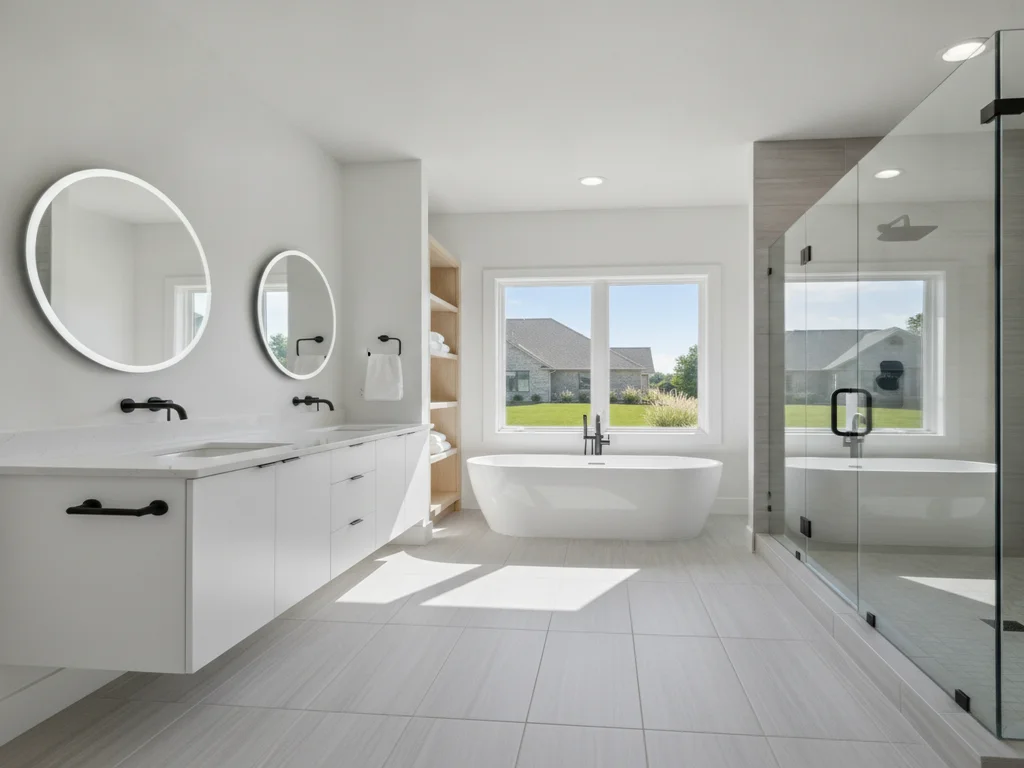
Slip resistance is not a vibe — it is measured. The tile industry uses a lab value called DCOF (dynamic coefficient of friction) under the ANSI A137.1 standard, and tile meant for level interior floors that may get wet is generally expected to reach at least 0.42 DCOF. It is not a promise you will never slip, but it turns a vague hope into a spec you can ask for by name. When we select floor tile for a KC bathroom, we look for a floor-rated tile that meets that benchmark — not a glossy wall tile pressed into service on the floor.
On a shower floor, smaller tiles and mosaics mean more grout lines per square foot, and grout gives your feet more to grip than a large, smooth tile. That is why 2-inch mosaics and penny rounds are classic shower-floor choices — the texture is built into the layout.
Finish matters more than material. A honed, matte, or textured surface grips far better than a polished one, which is why polished tile and polished stone belong on walls, not on wet floors. Many tile lines offer a matching textured floor tile made specifically for this.
You can use a smooth, large-format tile on the bathroom floor for looks and switch to a textured mosaic inside the shower where water collects. Matching color families lets the room read as one design while the wet zone stays safe.
A floor that drains well is a safer floor. A correctly sloped base sends water to the drain instead of letting it pool, so you are standing on damp tile rather than standing water — one more reason the base is built with care.
Porcelain tile (textured/matte)
The workhorse of safe bathroom floors — durable, low-maintenance, and available in textured finishes and small formats. Look for a floor-rated tile with a stated slip-resistance value rather than a glossy wall tile pressed into service on the floor.
Natural stone (honed)
Honed (matte) stone in a small format can be both beautiful and grippy. Skip polished stone on floors, and remember that most natural stone needs periodic sealing — especially in our hard water.
Pebble and mosaic
Pebble floors and small mosaics are naturally slip-resistant thanks to all that texture and grout. They feel great underfoot in a shower; just plan on a little more grout cleaning to keep them fresh.
Slip-resistant vinyl / LVT
For a bathroom floor outside the shower, quality luxury vinyl tile with a textured wear layer is warm underfoot, water-resistant, and comfortable — a practical, budget-friendly option in a busy family bath.
Slip resistance is where a bathroom remodel quietly becomes an aging-in-place project. Building a safer floor now — a textured shower-floor mosaic, a matte bathroom tile, a well-sloped base — means the room already works if mobility changes later. Pair it with grab-bar blocking and a curbless entry and you have a bathroom that is safe without looking clinical.
Kansas City's hard water is worth keeping in mind: textured floors and grout hold onto mineral scale a little more than polished surfaces, so a regular cleaning routine keeps a slip-resistant floor both safe and good-looking. That is a small trade for a floor that grips when it is wet.
In the metro's older homes, we frequently replace slick, dated shower pans and glossy floor tile that were never meant to be walked on wet. Choosing a floor-rated, textured tile is one of the simplest, highest-value safety upgrades in the whole remodel.