Once you have decided to build a deck, the biggest question is what you walk on: composite boards or real wood. It is the decision that most shapes both your upfront cost and how much of your summers you spend maintaining the deck instead of enjoying it. Neither is universally right — it comes down to how you weigh cost today against upkeep and lifespan.
One thing to clear up first: this choice is about the deck surface and railing. Underneath, the structural frame — posts, beams, and joists — is pressure-treated wood on both, set on footings dug below the frost line. So 'composite vs. wood' really means composite decking on a treated frame, versus wood decking on a treated frame.
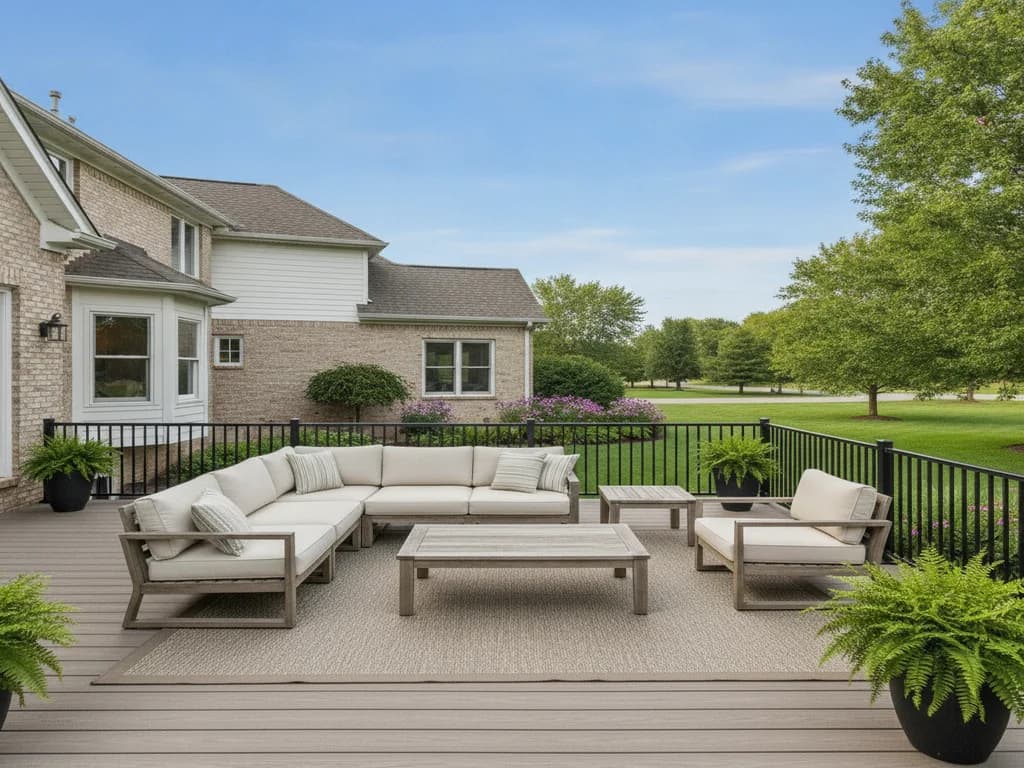
Advantages
- Very low maintenance — no staining or sealing, just soap-and-water cleaning.
- Will not rot, splinter, warp, or feed insects the way wood can.
- Consistent color and long manufacturer warranties (often 25 years or more).
- Holds up well to Kansas City's humid summers and freeze-thaw winters.
- Hidden fasteners give a clean, screw-free surface.
Trade-offs
- Higher upfront material cost than pressure-treated wood.
- Darker boards can get hot in direct summer sun.
- A manufactured look some homeowners prefer over natural wood grain.
- Damaged boards are replaced rather than sanded and refinished.
Advantages
- Lower upfront cost, especially in pressure-treated lumber.
- The natural look and feel of real wood, and cedar's warm tone.
- Tends to stay cooler underfoot than dark composite in full sun.
- Repairable and refinishable — sand, re-stain, or swap a single board.
Trade-offs
- Needs regular cleaning and re-sealing or staining to survive our climate.
- Can warp, crack, splinter, or rot over time without upkeep.
- Shorter usable life than composite when maintenance slips.
- Ongoing stain-and-seal cost adds up over the years.
Weigh upfront budget against how much maintenance you are willing to do and how long you plan to enjoy the deck. There is no wrong answer — only the one that fits how you want to spend your time.
Choose composite if
- You want to spend weekends on the deck, not maintaining it.
- You are planning to stay and value a 25-year-plus lifespan.
- You would rather pay more now than stain and seal every couple of years.
- A consistent, modern finish appeals to you more than natural grain.
Choose wood if
- Controlling the upfront budget is the priority.
- You love the look and feel of natural wood or cedar.
- You do not mind periodic sealing to keep it protected.
- You want the flexibility to refinish or repair board by board.
Kansas City is genuinely hard on a deck. Humid summers, hard freezes, and the freeze-thaw cycling in between all work on the surface, while expansive clay soil moves the ground the whole thing stands on. That climate is the strongest argument for composite: it shrugs off the moisture swings that make wood cup, crack, and rot, and it never needs the annual sealing our weather demands of wood.
If you go with wood, the USDA Forest Products Laboratory is clear that pressure-treated lumber lasts when it is kept sealed and detailed to shed water — so plan on a real maintenance routine rather than hoping the boards hold up on their own. Cedar and treated pine both work here; both want regular care.
Whichever surface you choose, the frame and footings are what keep the deck safe and level on our clay. We build the structure in treated wood on footings set below the frost line, so seasonal soil movement and frost heave do not shift the deck — the surface material rides on top of that foundation.